Cardiff describes her way of working as a sort of Rorschach test- an instinctual response to her surroundings
You can still follow the walk today, but some street names and shop fonts have changed. 'The missing voice' lives on as an elegy for navigating London, I stand at on the train, shoulder to shoulder with others, yet somehow still anonymous. Go into the city, and it can sometimes feels like it's repeating itself: a copy-paste of 'new London vernacular,' a hollow proposal of aspiration. It's all the same, but also somehow always changes, non-consensually, abruptly. The street slips through my grasp before I manage to get get bearings, a reminder that even if we wanted to stay and claim a spot for ourselves, we are just passing through.
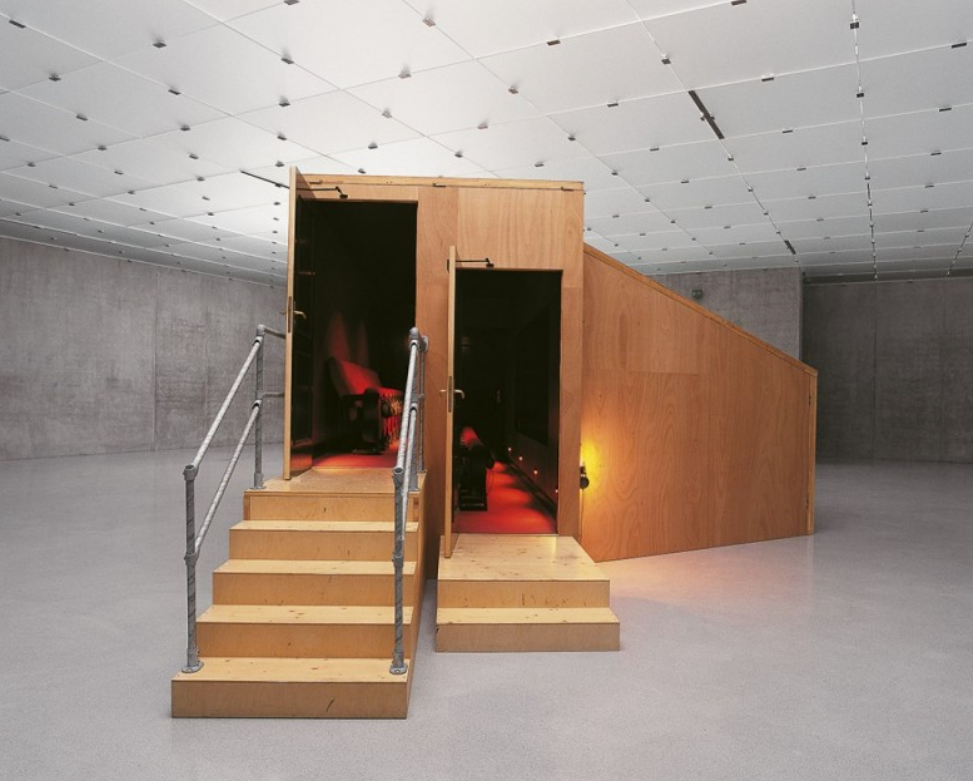
Janet Cardiff & George Bures Miller 'the paradise institute', Installation at the Venice Biennale
This installation follows the artists studies of the “physical aspect of sound," its carnal effect on the body, not its narrative connotations. In realising the embodied architecture of sound,"What is more particular about the installation is the personal binaural “surround sound” that every individual in the audience experiences through the headphones. The sense of isolation each might feel is broken by intrusions seemingly coming from inside the theatre. A cellphone belonging to a member of the audience rings. A close “female friend” whispers intimately in your ear: “Did you check the stove before we left?” Fiction and reality become intermingled as absorption in the film is suspended and other realities flow in." (Cardiff, Miller)
"Listening to the tram, it is easy to notice how listening/hearingand other senses are so interconnected and how they affect and en-rich each other. The vibrations caused by motors and movements ofthe tram are echoing and even amplifying the sensory experiencesbelonging to auditory domain. The multimodal experience thoughfelt, heard, and even seen vibrations animate the vehicle, causing arich embodied sensory experience." (Bennet)
➼ Acoustemology: a sonic way of knowing and being in the world
➼ "the listener’s perception of place and its affective ca-pacity is not enduring or repetitive; rather, it is temporal and exists moment to moment"
➼ phenomenological way of listening: sound is lived in and listening is embodied
➼ "the organic ear and prosthetic ear"